 blog
Emergency Plumbing Repair: What to Do Right Now
Table of Contents
- What Counts as an Emergency Plumbing Repair
- Plumbing Emergency Checklist: Your First Steps
- How to Shut Off Your Main Water Valve
- Burst Pipe Repair: Identifying and Responding to Leaks
- Questions to Ask an Emergency Plumber Before Booking
- Why One Comprehensive Service Saves You Time and Money
- Frequently Asked Questions
Last Updated: October 19, 2026
What Counts as an Emergency Plumbing Repair
A plumbing emergency is any situation where water damage, contamination, or system failure poses an immediate threat to your home or safety. Unlike routine maintenance, an emergency plumbing repair cannot wait for a convenient appointment. Common emergencies include burst pipes, sewage backups, complete loss of water pressure, and gas line leaks that demand immediate professional attention.
The distinction matters because emergency plumbing repair in Atlanta requires rapid response. A burst pipe can release hundreds of gallons per day. A sewage backup creates health hazards. Gas leaks threaten lives. These situations differ fundamentally from a slow drip under the sink or a running toilet that's been annoying you for weeks.
Not every plumbing problem qualifies as an emergency. A leaky faucet, slow drain, or water heater that needs replacement can typically wait for business hours. But if water is actively damaging your home, your water supply is cut off, or you smell gas near plumbing fixtures, that's an emergency. At Farm Finger's, we understand the urgency. Our team responds to emergency plumbing repair calls because we know the damage accelerates by the hour.
The key indicator: would a delay of several hours cause significant damage, health risk, or property loss? If yes, it's an emergency.
Plumbing Emergency Checklist: Your First Steps
When you discover a plumbing emergency, the first minutes matter most. Your immediate actions can minimize water damage and contain the problem until professional help arrives.
Here's what to do right now:
- Stop the water source if possible. Locate the shut-off valve nearest to the problem. If you can't find it, move to the main water shut-off (covered in the next section).
- Turn off electricity to affected areas. If water is near electrical outlets, switches, or appliances, kill power to those circuits at your breaker panel. Water and electricity are a dangerous combination.
- Open faucets and drains to relieve pressure. If you've shut off the main valve, opening cold-water taps helps release trapped pressure in the lines.
- Document the damage with photos. Your insurance company will need evidence. Photograph standing water, damaged materials, and the source of the leak before cleanup begins.
- Move valuables away from the water. Electronics, documents, furniture, and personal items should be relocated to dry areas immediately.
- Call a professional emergency plumbing repair service. Do not attempt major repairs yourself. A mistake can worsen the damage and create safety hazards.
Farm Finger's responds to emergency plumbing repair calls throughout the area. We arrive prepared to assess the damage, stop the water flow, and begin repairs immediately. The faster you act and the faster professionals respond, the less damage your home sustains.
How to Shut Off Your Main Water Valve
Knowing how to shut off your main water valve is the single most important skill for handling an emergency plumbing repair. This valve controls all water entering your home. Turning it off stops water from flowing through burst pipes, leaks, and failed fixtures.
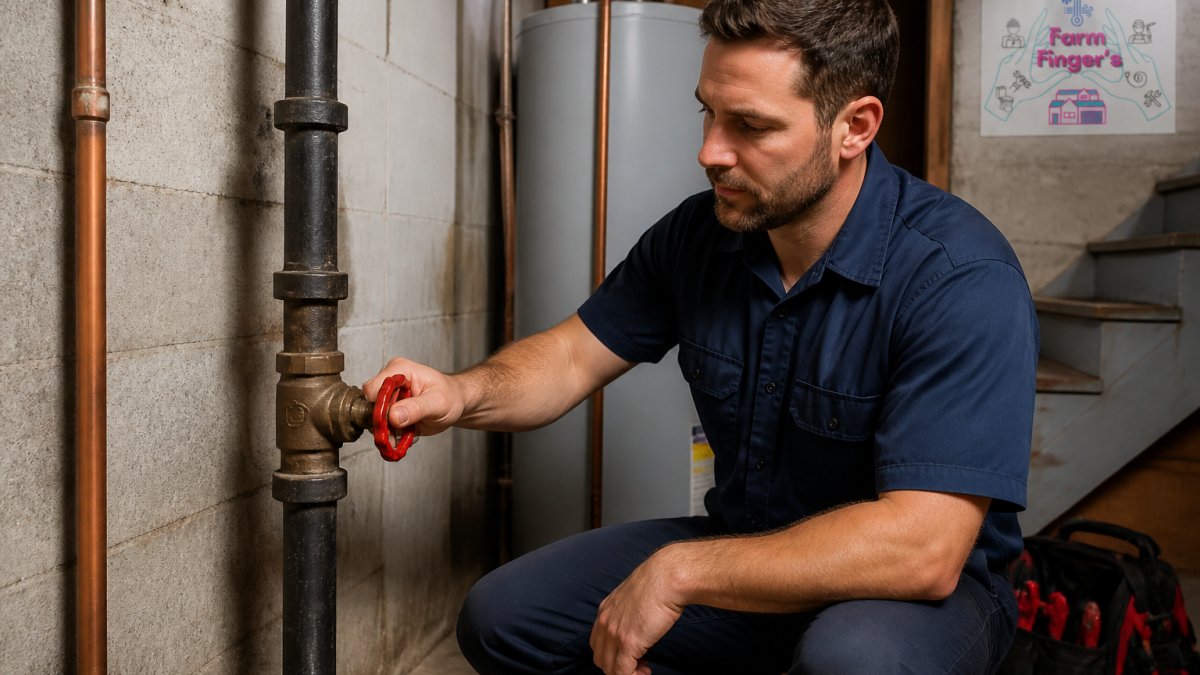
Your main water shut-off is typically located where the water line enters your home. In many houses, it's in the basement, crawl space, or utility room. Look for a valve on the main water line coming from the street. The valve may have a handle shaped like a wheel or a lever.
To shut off the main water:
- Locate the valve. Check your basement or utility room first. If you can't find it, look outside near the foundation or in a meter box at the street. Some homes have the valve in the garage or under the kitchen sink.
- Turn the handle clockwise. A wheel-shaped handle turns like a faucet. A lever handle turns 90 degrees to the "off" position. Turn firmly but don't force it, excessive pressure can damage the valve.
- Verify water has stopped. Open a cold-water tap inside your home. If water still flows, the valve isn't fully closed. Return to the shut-off and turn it further.
- Leave it off until repairs are complete. Keep the main valve closed while professionals assess and repair the damage.
If your main valve is stuck, broken, or you cannot locate it, call a professional immediately. Farm Finger's can locate your shut-off valve and turn it off for you, then proceed with emergency plumbing repair work.
Burst Pipe Repair: Identifying and Responding to Leaks
Burst pipes are among the most damaging plumbing emergencies. A single burst can release 250 gallons of water per day. Recognizing the signs early and responding quickly prevents catastrophic water damage.
Signs of a burst pipe include sudden loss of water pressure throughout your home, visible cracks or splits in exposed pipes, water pooling in your basement or crawl space, discoloration on walls or ceilings, and mold growth in unusual areas. If you notice any of these, shut off your main water valve immediately and call for emergency plumbing repair.
Burst pipes typically occur in cold weather when water inside the pipe freezes and expands, or when pipes age and corrode. Older homes with galvanized steel pipes are especially vulnerable. Copper and PVC pipes are more resistant but still fail under extreme conditions.
What you should not do: don't attempt to patch or wrap a burst pipe yourself with tape or sealant. These temporary fixes fail quickly under water pressure. Don't wait to see if the problem resolves on its own, it won't. The leak will only worsen.
When you call for emergency plumbing repair, professionals will locate the burst section, shut off water to that line, remove the damaged pipe section, and install new pipe. The repair method depends on pipe material, location, and the extent of damage. Farm Finger's has handled countless burst pipe emergencies and can restore your water supply quickly while preventing further damage to your home.
Questions to Ask an Emergency Plumber Before Booking
Before you commit to any emergency plumbing repair service, ask these questions to ensure you're getting reliable, honest work.
What is your response time? Legitimate emergency services answer calls 24/7 and commit to specific response windows. If they can't promise a timeframe, keep looking.
Do you charge a service call fee? Many emergency plumbing repair providers charge a fee just to come out and diagnose the problem. Ask if this fee applies and whether it's credited toward repair costs if you proceed with their work.
How do you price repairs? Ask whether pricing is hourly, flat-rate per repair, or based on the scope of work. Request an estimate before work begins. Transparent pricing prevents surprise bills.
Are you licensed and insured? Verify their license with your state's licensing board. Ask for proof of liability insurance and workers' compensation coverage. This protects you if something goes wrong.
What warranty do you offer? Reputable emergency plumbing repair services stand behind their work. Ask what's guaranteed and for how long.
Can you provide references? Ask for contact information from recent customers. Genuine reviews and past client feedback tell you whether the service delivers on its promises.
Will you explain what's wrong before fixing it? A professional should walk you through the problem, explain why it happened, and describe the repair approach. If they rush or refuse to explain, that's a red flag.
At Farm Finger's, we answer these questions directly. We respond quickly to emergency plumbing repair calls, provide transparent pricing, hold all proper licenses and insurance, and explain every repair before we begin work. Our 12 years of experience means we've solved every common plumbing emergency and many unusual ones.
Why One Comprehensive Service Saves You Time and Money
Calling separate contractors for plumbing, electrical, HVAC, and other home repairs creates delays, inconsistent quality, and higher overall costs. Each contractor charges a service fee. Each schedules independently. Coordination becomes your responsibility. Mistakes by one contractor often affect the others.
A comprehensive service provider handles multiple repairs in one visit. One arrival. One service fee. One point of contact. One team familiar with your home's systems and layout.
This approach saves money because the contractor doesn't duplicate travel time or overhead. It saves time because repairs happen simultaneously rather than sequentially. It reduces errors because one team understands how different systems interact.
Many homeowners discover this advantage after an emergency plumbing repair reveals other problems, a corroded water line, outdated electrical work, an aging HVAC system. Rather than juggling three different contractors over weeks, a full-service provider addresses everything in a coordinated plan.
Farm Finger's specializes in exactly this approach. Our team handles plumbing, electrical, HVAC, handyman work, and custom carpentry. When you call for emergency plumbing repair, we can simultaneously address related issues, upgrading old water lines, installing new fixtures, or repairing related damage. This comprehensive capability means faster resolution and lower total cost.
When an emergency plumbing repair strikes, you need immediate, reliable help. The steps you take in the first minutes, shutting off water, documenting damage, and calling professionals, determine how much your home suffers. Farm Finger's responds to emergency calls 24/7 with the expertise to handle burst pipes, leaks, and other urgent water problems. Our team brings 12 years of experience and a commitment to transparent, affordable service. Don't wait for an emergency to happen, save our number now. When you need emergency plumbing repair, we're ready to help. Book an appointment today and protect your home from water damage.
Frequently Asked Questions
What should I do while waiting for an emergency plumber to arrive?
Turn off the main water valve immediately to stop water flow and prevent further damage. Move items away from the leak, place towels or buckets to catch water, and document the damage with photos for insurance. Turn off the water heater if the emergency involves hot water. Avoid using other plumbing fixtures until the plumber arrives. Keep the area accessible so the plumber can work efficiently when they arrive.
How can I tell if a pipe has burst?
Signs of a burst pipe include sudden drops in water pressure, unexplained wet patches on walls or ceilings, visible water pooling under sinks or in basements, discolored water, or a sudden spike in your water bill. You may also hear hissing or spraying sounds coming from walls or under floors. If you suspect a burst pipe, shut off the main water valve and call for emergency plumbing repair immediately to prevent structural damage and mold growth.
Are emergency plumbers available 24 hours a day?
Many emergency plumbing services operate around the clock, including nights, weekends, and holidays. However, availability and response times vary by provider. When calling for emergency plumbing repair, confirm their hours of operation and ask about their average response time.
Why should I use one company for multiple home repairs instead of calling different contractors?
Using a single service provider for plumbing, electrical, HVAC, and other repairs eliminates multiple service fees, reduces scheduling conflicts, and speeds up project completion. One team understands your home's systems holistically, which often reveals issues other contractors might miss. You also build a relationship with one trusted provider rather than vetting multiple contractors, and coordinating repairs becomes simpler when one company manages the timeline.